Border Crossing to Argentina - Yacuiba to Santa Cruz
»
photoset (13 photos) «
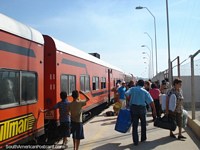
When I crossed the border from Salvador Mazza in Argentina to Yacuiba in Bolivia, it happened to be Bolivia's National Independence Day. The
streets were jammed with parades, a stage, marching bands, onlookers, stray dogs and chaos. The bus stood still for 4hrs before we were allowed to
pass through the town, but we did get off the bus and walk around to watch the celebrations.
More
date: August 2008



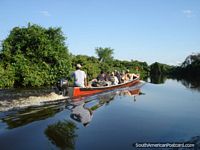

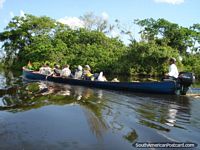 A group on a riverboat in the pampas in Rurrenabaque.
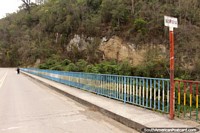
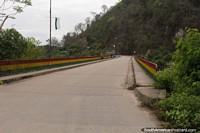 From the Bolivian side at Bermejo looking across the bridge to Argentina.
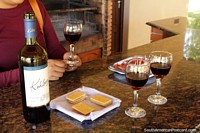
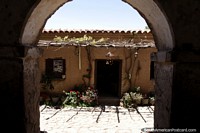 View through a stone arched door to the patio at the Old House Vineyard near Tarija.
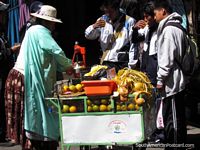 Freshly squeezed orange juice for sale in La Paz streets.
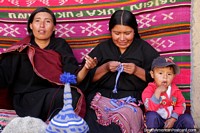
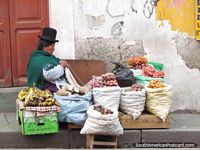 Woman knits and sells potatoes at La Paz markets.
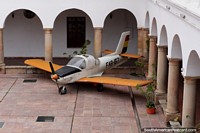 Small airplane in the courtyard of the Military Museum in Sucre.
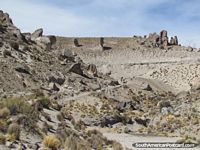
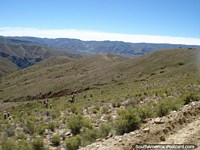 Cactus alongside the road between Tupiza and Uyuni.
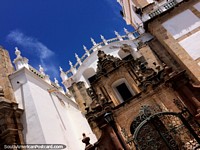
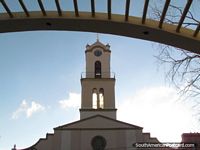
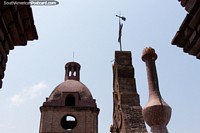
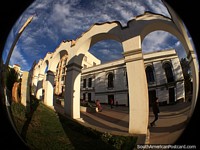
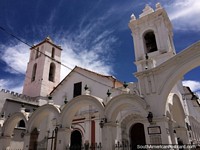 Basilica de San Francisco and iconic archways, built 1539-1581 in Sucre.
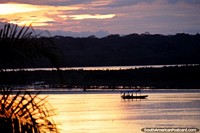
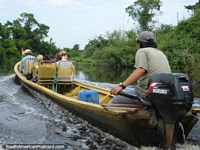 A tour group on the river in the Rurrenabaque pampas.
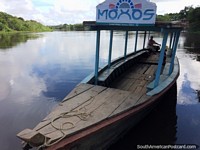 Tour boat of Moxos Tours, ready to take me out to look for wildlife for the day in Trinidad.
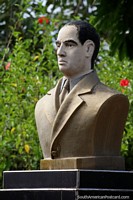 Dr. Juan de Dios Martinez, one of 3 busts of important men in the plaza in Riberalta.
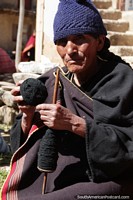 Traditional methods of weaving wool demonstrated by the women at Puka-Puka village.
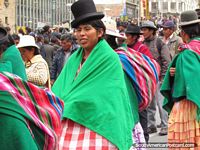
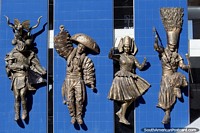
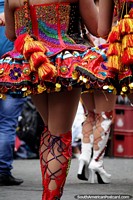 Legs and colorful dresses worn by the women at the grand festival El Gran Poder in La Paz.
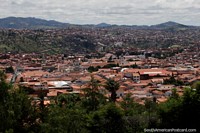 City of Sucre with red tiled roofs, view from Recoleta up on the hill.
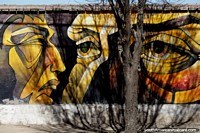 The serious faces of indigenous warriors with powerful eyes, street art in Oruro.
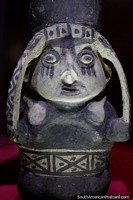 Cuchimilco, 1100-1450 dc, from Peru, Chancay culture, Musef Museum, Sucre.
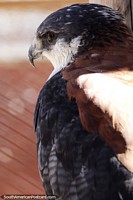 Halcon, meat eater, lives in the mountains, sharp beak, Oruro zoo.
 Black Collared Hawk in the Rurrenbaque pampas.
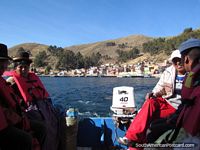
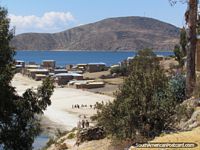 Amazing views at Island of the Sun, Lake Titicaca.
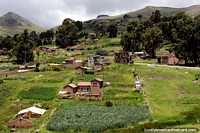 Beautiful countryside around Copacabana on the journey towards La Paz, coca field in the foreground.
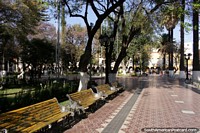 Plaza 14 de Septiembre, the central plaza in Cochabamba.
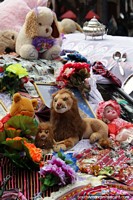 Brown lions, dolls and toys, decorated cars in Sucre for the festival of the Virgin of Guadalupe.